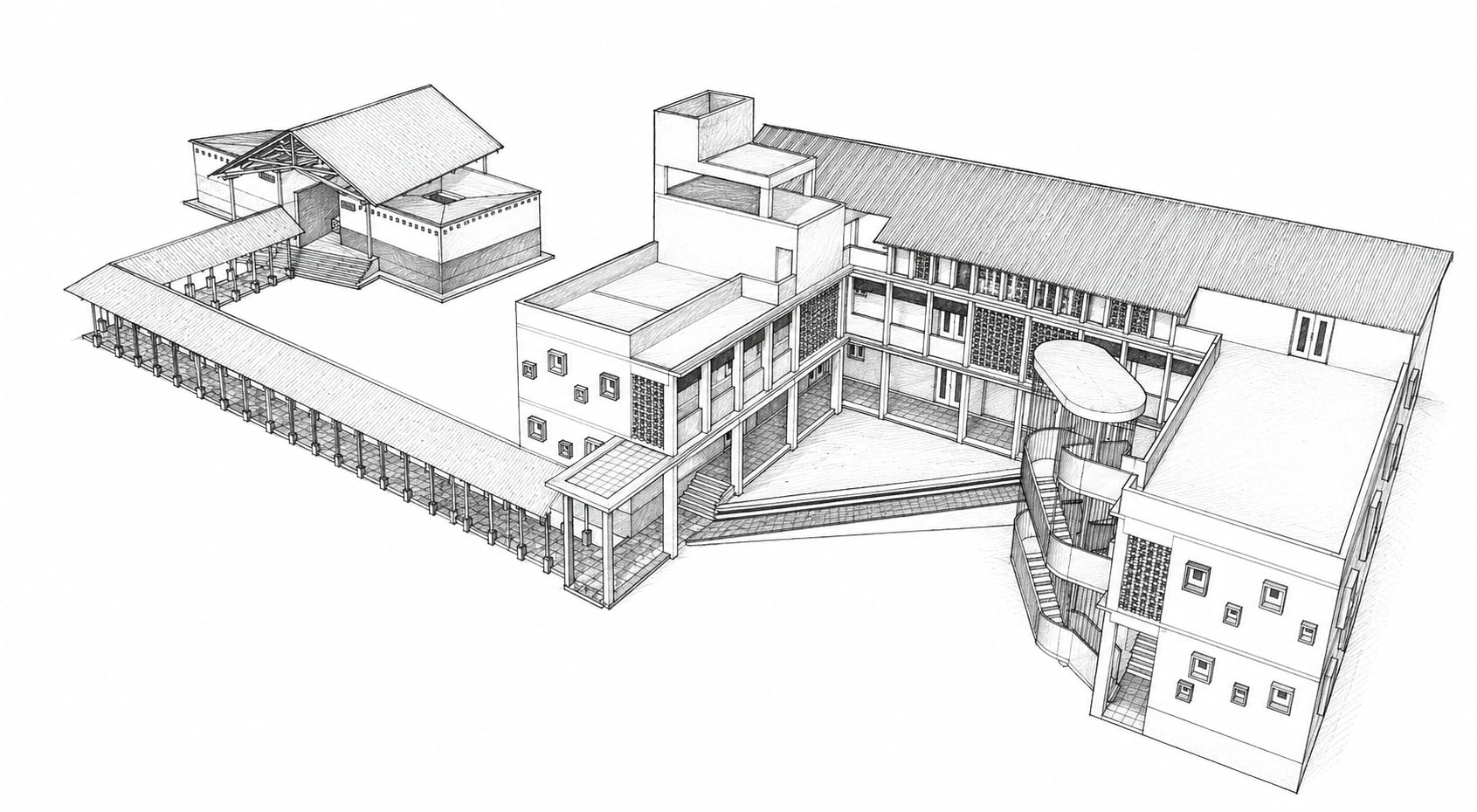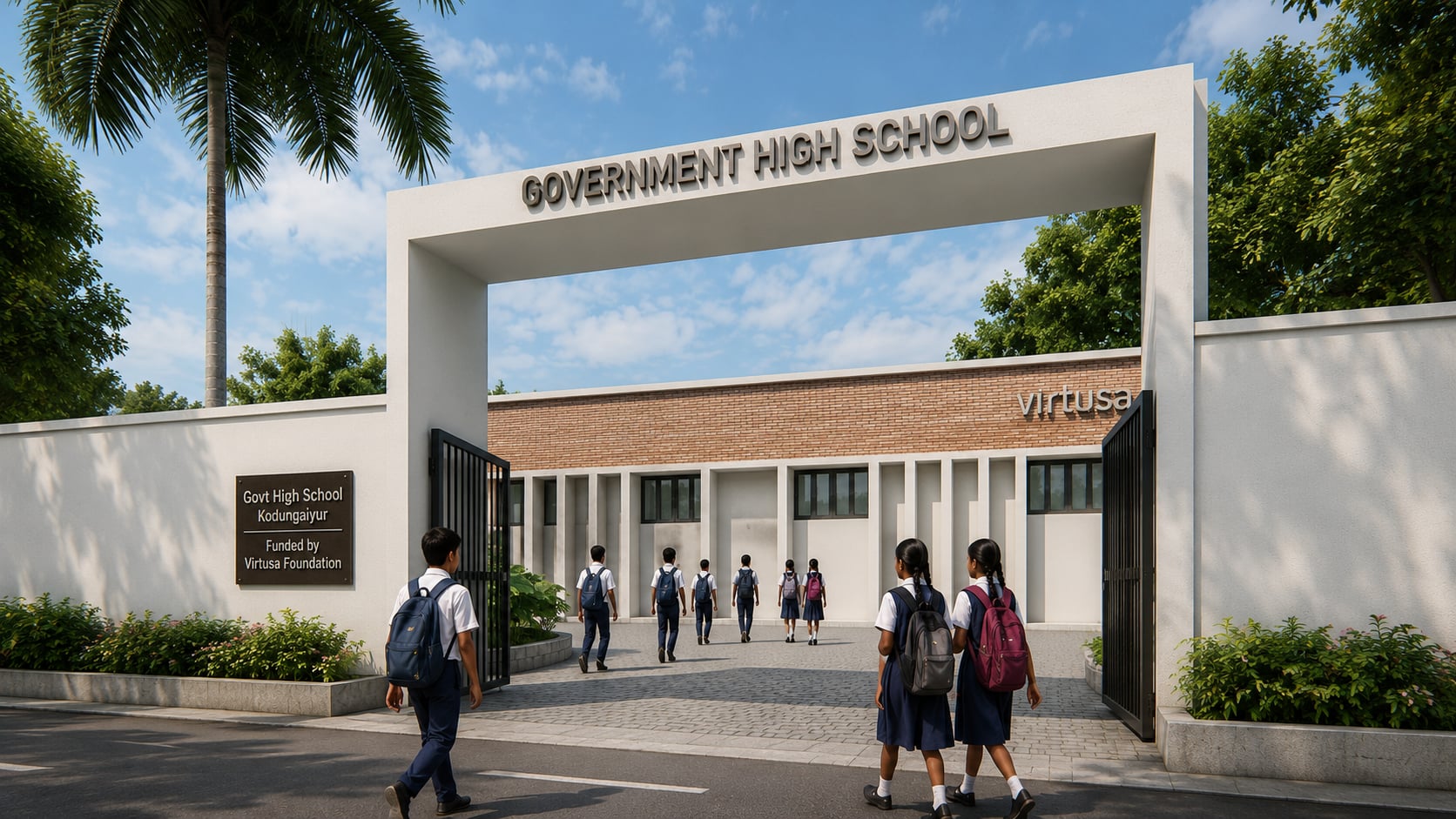
The building had stood for a century, and it showed — spalled plaster, water ingress through the parapet, timber members that had quietly failed behind intact-looking finishes. The instinct in most Indian institutional refurbishment is to demolish and rebuild. That was explicitly off the table here.
Conservation on this track means the repair has to be reversible, materially honest, and documented. Lime plaster matched to the original mix rather than cement render. Structural assessment before any load was touched. Every intervention recorded so a future conservator can see exactly what was done in 2024 and what has been there since 1922.
The second constraint was that the building had to keep working. It was never emptied — the restoration was sequenced around a live institution, in phases, so that teaching continued throughout. That is a project management problem as much as an architectural one.